
TOOTH WHITENING

What is tooth whitening?
There are a variety of tooth-whitening preparations available on the market. There are two basic types – one is used professionally in the office and the other is the used by patients at home without the dentist’s observation. It is prepared with 25-35% hydrogen peroxide and 16% carbamide peroxide respectively.
Hydrogen peroxide is an active substance that is decomposed into water and oxygen molecules in a chemical reaction, which further produces a highly reactive superoxide intermediate, and then the reaction penetrates the enamel and dentin and begins the process of resolution. The bleaching procedure does not damage the teeth.
Indication
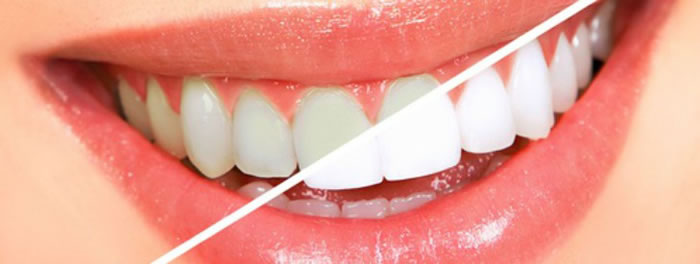
Indications for avoiding discoloration are exogenously produced (smoking cigarettes, frequent consumption of coffee, tea, red wine, aging, endodontic treatments, fillings) or endogenously (dental fluorosis, tetracycline teeth). Vital and avital teeth, a single tooth or a group of teeth can be whitened.
Procedure
In the cosmetic dentist clinic, optimal results are achieved with the use of the Zoom 2 Whitening System. To professionally avoid a tooth, it is performed by a dentist at the doctor’s office, and the results are immediately visible. The whole procedure takes about an hour, and the teeth can break out in several shades. The procedure includes preparing the patient, determining the current tooth color (radio later comparison and evaluation of the success of the procedure), isolating the gingiva and soft tissues, applying the avoidance gel (25% hydrogen peroxide), illuminating the Zoom 2 lamp, and applying the desired amount for desensitization and glow .
Percentage of avoidance of variants from patient to patient, depending on tooth structure. This procedure is recommended and has advantages over others (home preparation) as extensive research and clinical studies have shown that doctor-controlled avoidance is the safest way.
The results they obtained were adequate and regular oral hygiene, long lasting. It should be noted that two weeks after the avoidance procedure, they should be careful about smoking and eating habits – smiling to drink coffee, teas or dark colored drinks.
There is a possibility that you may experience slight tooth sensitivity during the process, but this is completely normal and does not pose any danger since the acceleration after treatment leads to the reduction of any symptoms.